
The Voice of Job Seekers

Mark Anthony Dyson ★ Career Writer ★ Speaker ★ Thinker ★ Award-winning Blog & Podcast! ★ "The Job Scam Report" on Substack! ★ I hack and reimagine the modern job search!

  • TVOJS Podcast
    • Guest Posts Topics or Podcast Guests
  • ABOUT ME
  • Press page for Mark
  • Hire Mark to Speak
  • Hire Me for Content Writing
  • Guides & Resources 2023
  • Press Bylines
  • PRESS MENTIONS
  • Articles
  • Guides & Resources

by Mark Anthony Dyson

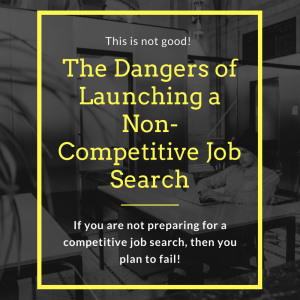
The Dangers of Launching a Non-Competitive Job Search

The Dangers of Launching a Non-Competitive Job Search

In 2011, like today, competition for jobs –fierce! If you are not preparing for a competitive job search, then you plan to fail. If you don’t mind being ignored, maligned, or discarded then write, talk, and sound like everyone who wants the same job you do. Just keep using the same strategies, words, and font size on your résumé. Is this your plan to thrive, and arrive?

The Employment Doors Are Cracked Open, Not Wide Open

Employers are savvy in their approach to exclude low-hanging job seeker fruit. It’s not creative, but unqualified candidates are sifted like flour:

1. The unemployed are excluded from opportunities. If you read Catherine Rampell’s article July 26, 2011, outraged is what I felt:

A recent review of job vacancy postings on popular sites like Monster.com, CareerBuilder and Craigslist revealed hundreds that said employers would consider (or at least “strongly prefer”) only people currently employed or just recently laid off.

Rampell, C. (2011, July 26). New York Times.


2. Age and gender discrimination becoming hard to detect or prove.

However, employers are subject to sex and age discrimination laws, which are often implicated when someone is fired for being fat or unattractive. This is the argument being made in the lawsuit filed by the Resorts casino waitresses.

Rabiner, S. (2011, April 6). Findlaw.com

These instances are two of many concerns, depending on the individual’s willingness to compete. That means one must shed light on his or her best attributes to remain competitive.

The Fastest, Biggest, and Strongest is Not The Winner

It is easy to apply to a lot of jobs on Sunday morning in the job section. Well, it used to effective once upon a time because we believed job hunting was a numbers game. Times have changed.

No excuses are acceptable for incorrectly applying to jobs you qualify for or don’t fit. In either case,  you’re disqualified. No reason for not researching company culture, or not addressing a cover letter to a person.

Are you the one who claimed to be Internet savvy on your resume? Mmmm…interesting.

Here is an excerpt from an article printed in The Dominion Post the demonstrates this point:

Thorndon Antiques and Collectables owner David Harcourt received 200 applications after advertising for a retail assistant in Wellington, but found that many of them were not really seeking the advertised job.

At least 30 applicants said they wanted to be a teacher or an artist.

“I suggest there are two possible ways for applicants to deal with this problem,” he said in an email to all 200 jobseekers. “One is to hide the fact that you don’t really want the job but are applying only because you have nothing better to do, or because you won’t get the unemployment benefit unless you make such applications.

“However, a far better course, in my view, would be not to apply at all.”

He thanked them all for applying but offered some further tips. He advised them to double-check spelling and grammar, avoid describing themselves as “bubbly” and include details on education.

“Many applicants said little or nothing about their schooling . . . I was rather dismayed at this, so here is some friendly advice from a complete stranger: if you have no or little education, go back to school now.”

One of the 200 applicants, Canadian Amanda Priebe, said she thought the response was outrageous, and she felt insulted at its “disrespectful, arrogant tone”.

Cowlishaw, S. (2011, July 5) Dominion Post

The Bottom Line: If You’re Not Conducting a Competitive Job Search, You Feel Entitled…sort of

I think that this writer wrapped up being competitive at least in interviews up very nicely:

How do you ace a job interview? Here are some tips.

Recognize that when you interview for a job, employers are looking for evidence of four things: your ability to do the job, your motivation, your compatibility with the rest of the organization, and your self-confidence. If you understand how all those things play into an interviewer’s questions (and an employer’s hiring decisions), you’ll have a better chance of getting hired.

Koonce, R. (1997). How to ace a job interview. Training & Development

There are too many other candidates with your qualifications, that possess “strong communications skills,” and has “an excellent track record.” How many of you display a professional Linked In profile? How many job seekers host a local 30-minute show on a college or National Public Radio spot in their city? Which one of you blogs or possess a website that displays knowledge and expertise?

I would say, very few.

You may think of others ways other than the suggestions above, and that’s OK. Just don’t forget that someone wants to finish if not ahead of you, but, instead of you.

About Mark Anthony Dyson

I am the "The Voice of Job Seekers!" I offer compassionate career and job search advice as I hack and re-imagine the job search process. You need to be "the prescription to an employer's job description." You must be solution-oriented and work in positions in companies where you are the remedy. Your job search must be a lifestyle, and your career must be in front of you constantly. You can no longer shed your aspirations at the change seasons. There are strengths you have that need constant use and development. Be sure you sign up to download my E-Book, "421 Modern Job Search Tips 2021!" You can find my career advice and work in media outlets such as Forbes, Inc., Fast Company, Harvard Business Review, Glassdoor, and many other outlets.
  • Mail
  • |
  • Web
  • |
  • Twitter
  • |
  • Facebook
  • |
  • LinkedIn
  • |
  • More Posts(776)

Filed Under: Job, Jobseekers Tagged With: Competitive, Job Search, Jobseekers

by Mark Anthony Dyson

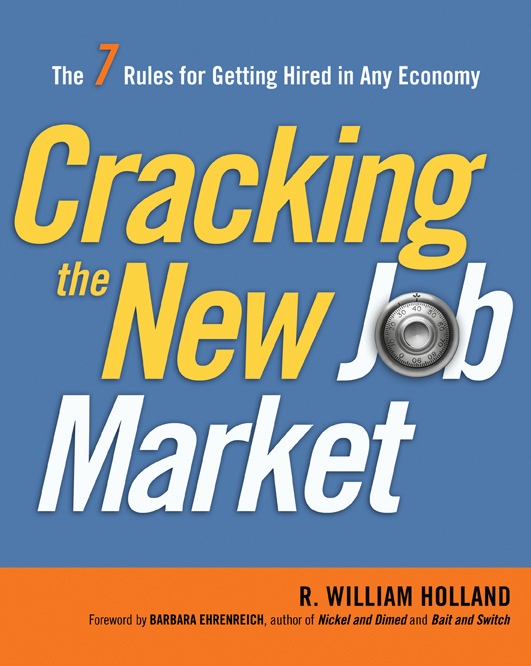
Interview with Bill Holland: Cracking The New Job Market Author

Interview with Bill Holland: Cracking The New Job Market Author

I reviewed Mr. Holland’s book last Wednesday, Cracking The New Job Market: The 7 Rules for Getting Hired in Any Economy. He is a very busy man, and gracious, to answer a few questions along the way:

The Voice of Jobseekers (TVOJ):  You mentioned in your new book about “value creation.”  What do you think prohibits a job seeker from discovering his or her own worth?

Holland:  We are in the midst of a sea-change in which “worth” is taking on new meanings.  Traditionally, you might review the work of companies like Hay Consultants who would conduct surveys to see what companies were paying workers with certain levels of education, experience and skill.  Because pay levels varied accordingly, white collar workers could get a good sense of what a “fair wage” would be for them individually.   Those calculations are now more difficult to make and often fly in the face of personal experience.

It is easy for someone to understand that companies are interested in those who can create value for the enterprise.  Increasingly, workers are retained only for as long as it makes sense to do so. The job of the $150,000 a year executive can be here today and gone tomorrow depending on the current value calculation a company makes.  When the goods and services you produce can best be produced elsewhere, it changes the value calculation.  As such, the idea of linear careers that are “onward and upward” may be a thing of the past.

The Great Recession has a lot to do with current levels of job market volatility.  But it will not end once the economy bounces back.  An individual’s worth in the market place is more of a day-to-day proposition than ever before.

(TVOJ):  I was involved in a discussion last week about how bold statements done by job seekers like billboard signs and newspaper ads are perceived as desperate, or a way of just standing out.  What do you think about his way of attracting employers?

Holland:  Getting attention in the job market this way is a gimmick.  That doesn’t mean gimmicks are bad or should not be used.  Sometimes, gimmicks work—just not very often and/or not very well.   Your chances are much better if you establish a solid track record of value creation and learn how to bring that record to the job market.

I understand that in a difficult job market people will resort to gimmicks and are vulnerable to a “host of dubious schemes, scams and unhelpful self-help books and DVDs.”   Grabbing at such straws is akin to buying a lottery ticket.  We all know someone is going to win, but there is little likelihood it will be you.

(TVOJ):  You mention the “Hidden Job Market” does not exist.  Yet there are employers and recruiters who say that is where the jobs are found.  What can job seekers do to unearth these opportunities?

Holland:  Initially what was meant by the “hidden” job market was the simple assertion that most of the jobs were not advertised.  That is, they were hidden from people who confined their job search to newspaper ads.  The idea has now morphed into the notion that the entire process is mostly an insider’s game than can only be accessed by getting to the hiring manager directly.  My view is that white collar recruiting was largely a decentralized affair and if you wanted a job, you needed to apply to the appropriate facility. The process was not so much hidden as it was splintered.  Today, if you are looking for work, it is helpful to target companies and determine how they recruit. Almost all recruiting today involves the Internet.  The hiring processes, once described as hidden (I prefer “splintered”) are now largely open and easily accessible.

If you want to know where to look, identify your target organizations and ask them how they recruit.  Most will be happy to tell you.  A family friend recently got his next job this way.  They told him to keep an eye open for job listings by becoming a “Fan” on Facebook.  He also engaged his network; had people put in a good word for him; used job boards; and regularly checked the job ads in the Wall Street Journal.  But sure enough, he learned of his next opportunity by doing exactly what they advised him to do.

(TVOJ):  If the recession worsens, do you think there will be a “newer” job market?

Holland:  There will be a newer job market whether the recession worsens or not.  Technology and globalization will continue to shape the market.  I can’t tell you precisely what it will look like except there is every reason to believe that work-place volatility and value creation will play prominent roles.

(TVOJ): What is the biggest lesson that everyone, working or not, learned about jobs from the “Great Recession?”  Since I am African-American, I feel compelled to ask if there is a special job search lesson for us to learn.

Holland:  In many respects the lessons are the same across the board.  There are several generations of African-America students (and others as well) who believe that they can go to college, get a job and join the middle class.  Formal education by itself will not accomplish that: And colleges and universities are not particularly equipped to fulfill the vocational dimension we expect from a college education. That is why I added Appendix A to my book “Helicopter Parenting is a Good Thing.”  Students need to understand that a college degree by itself is not sufficient.  When they and their parents truly understand value creation, their chances of being career-ready by the time they graduate is enhanced.

(TVOJ):  Recently, articles have been published about employers only inviting employed applicants for open positions.  Where do you think that comes from?  Does that make the job market more splintered?

Holland:  More splintered?  No, it makes it more difficult if you are between jobs.  These employers are sending clear messages that they get far too many applicants for job openings.  By eliminating the unemployed the applicant work load is reduced.  They believe the most talented people have jobs.  Value creation becomes even more critical to the success of potential candidates.  Start now to build your personal brand as a creator of value.

Mr. Holland’s book, Cracking The New Job Market: The 7 Rules for Getting Hired in Any Economy, is available on Amazon.com and other outlets. Don’t forget that tomorrow is the last day to qualify for a free copy of this book. Simply read last week’s post, Tweet or Retweet it on Twitter. Be sure that my Twitter account @MarkADyson is included so I can see it.

About Mark Anthony Dyson

I am the "The Voice of Job Seekers!" I offer compassionate career and job search advice as I hack and re-imagine the job search process. You need to be "the prescription to an employer's job description." You must be solution-oriented and work in positions in companies where you are the remedy. Your job search must be a lifestyle, and your career must be in front of you constantly. You can no longer shed your aspirations at the change seasons. There are strengths you have that need constant use and development. Be sure you sign up to download my E-Book, "421 Modern Job Search Tips 2021!" You can find my career advice and work in media outlets such as Forbes, Inc., Fast Company, Harvard Business Review, Glassdoor, and many other outlets.

  • Mail
  • |
  • Web
  • |
  • Twitter
  • |
  • Facebook
  • |
  • LinkedIn
  • |
  • More Posts(776)

Filed Under: Job, Jobseekers Tagged With: Hidden Job Market, Job Search, Job Seeker

by Mark Anthony Dyson

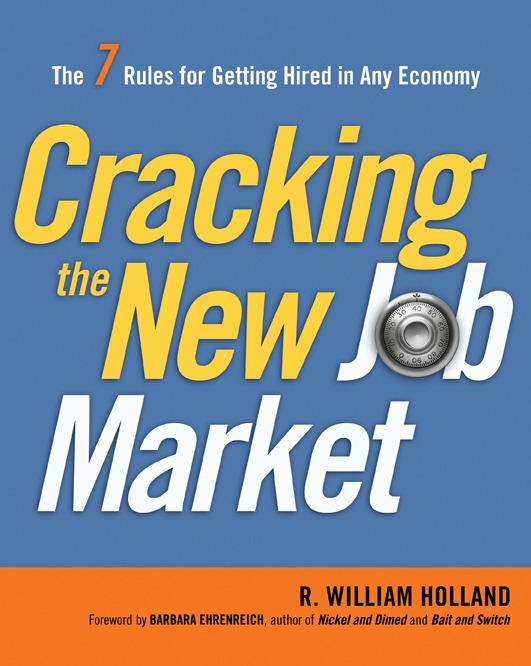
Book Review: Cracking the New Job Market, R. William Holland + Book Giveaway

Book Review: Cracking the New Job Market, R. William Holland + Book Giveaway

CrackingNewJobMarket


Bill Holland, the author of The 7 Rules for Getting Hired in Any Economy: Cracking the New Job Market, preferred to teach the choir, than “preach to the choir.” Job search education is forefront of Mr. Holland’s book applies to all of the job search communities and segments, especially to the white-collar worker. He promotes the notion that in the age of the supposed “hidden job market,” people are likely to focus on finding the secret jobs than to create and unearth their professional value. I will also give away a copy of this book FREE, as my review copy was FREE. I assure you, that I was not compensated for this review.

This practical book is essential to job seekers who have challenges in creating value, and demonstrating professional acumen through their resumes, interviews, and business networks. It is not full of resume and cover letter templates. Mr. Holland reasons that a strong resume and cover letter is not about you, but more about what the employer wants.

Mr. Holland presents a compelling case for 7 useful and dogmatic strategies:

Rule #1: Always Demonstrate Value. At the heart of what resumes should be about,  Mr. Holland explains that the successful resume includes what “The value the hiring organization is looking to have created.” It’s a powerful statement since many job seekers look for the quick fix, and do not cultivate worth from their personal well of professional accomplishments.

Rule #2: Your Resume: It’s About the Value You Create. In this chapter, Mr. Holland not only shows how to “infuse your experience with value”, and explains how that selecting key statements  accrue the attention of a potential employer. On his website, he states that he can provide courses contingent on the feedback he receives.

Rule #3: Use Social Media and Other Sites for Job Leads. In tackling the hot issue of “hidden job market”, he states that the “job market is not so much hidden as it is splintered.” He suggests that no longer job boards and Sunday classified ads monopolize job announcements. Social networking sites are one of the best places to discover opportunities, and build relationships that can lead to key information about employers and available positions. One of the few snags in this book is the broad overview of Social Media tools and services. Holland discusses Linked In, Twitter, and Facebook, but in general.

Rule #4: Interviews: They’re About the Value You Demonstrate. Throughout the book, the emphasis of “value creation” remains consistent and urgent. Infusing value throughout an interview remains a challenge of many job seekers, not only on resumes and interviews, but also pre and post-interviews.  He discusses interview attire, references, thank-you letters, and follow-up which ha an impact on employers.

Rule#5: You Get What You Negotiate, Not What You Deserve. Holland inserts that successful negotiation takes preparation that starts when you realize that you have to find another job. He has provided 7 rules for skillful negotiation that will help a job seeker  land the desired salary and benefit package.

Rule #6: Career Choice is More Than Following Your Passion. Holland states that passion can be an overrated determiner, “Those who look at career success solely through the prism of their passion can be in for a long and frustrating experience.” My takeaway from this considers the work I want to do, and the lifestyle I wish to create for myself is a part of the negotiation components. Holland  provides a chart that helps to sort out what is beneficial to you during the negotiation period.

Rule #7: The Best Way to Reenter the Job Market Is to Never Leave It. Holland reminds us that going back to school, volunteer work, and temporary work are options to remain in the job market. This is also part of the value creation strategy that is re-emphasized through the book by not allowing “…your career-related activities to lapse… .”

After reading the book, I felt as Holland has achieved the need for job seekers remain competitive in the job search. One of his strongest premises  is the notion of the nonexistence of the “Hidden Job Market.” Having worked with clients that heard the term, it scared them; however, Holland supports the premise through connecting value creation with sustaining an enduring personal brand that attracts employers.

As stated earlier, one of the few snags in the book was the lack of depth of Rule #3 on social media. I felt it was a genuine attempt, and the mentions were accurate. At the same time, Social Media is also about blogging, and learning to use it effectively. It is hard to talk about personal branding these days without embracing the full scope of tools or possibilities.

I recommend this book because of the key straight forward strategies offered could be used immediately. The importance of ready-to-use strategies is  crucial to everyone. He aptly puts the responsibility in the hands of the job seeker by emphasizing their own personal and professional value. Cheers to a book that is relevant, and significant, that helps job seekers everywhere to envision their worth.

NOW, about the give away

This is how you can get a copy of this book:

  1. Retweet, or Tweet this review on Twitter, Facebook, or Linked In OR…
  2. Comment below about an area you need help with discussed in the post

I hope to post the interview with Mr. Holland within the next two weeks. Please stay tuned by subscribing via RSS or email.

About Mark Anthony Dyson

I am the "The Voice of Job Seekers!" I offer compassionate career and job search advice as I hack and re-imagine the job search process. You need to be "the prescription to an employer's job description." You must be solution-oriented and work in positions in companies where you are the remedy. Your job search must be a lifestyle, and your career must be in front of you constantly. You can no longer shed your aspirations at the change seasons. There are strengths you have that need constant use and development. Be sure you sign up to download my E-Book, "421 Modern Job Search Tips 2021!" You can find my career advice and work in media outlets such as Forbes, Inc., Fast Company, Harvard Business Review, Glassdoor, and many other outlets.

  • Mail
  • |
  • Web
  • |
  • Twitter
  • |
  • Facebook
  • |
  • LinkedIn
  • |
  • More Posts(776)

Filed Under: careers, Job Search Tagged With: Book review, Hired, Job Search

  • « Previous Page
  • 1
  • …
  • 77
  • 78
  • 79
  • 80
  • Next Page »

Join the email list and get “12 Modern Job Search Strategies Beyond the Resume 2022”

Download free

The Fortune For Your Career Is In The Follow-up

Download free

I moderated a panel on Wealth Management for executives by Black Enterprise Magazine in October 2023 in Miami.

I was interviewed on Scripps News show, “The Why!” 4/13/2023

I talked with John Tarnoff and Kerry Hannon of “The Second Act” podcast about job searching after 50 in October 2022.

I was on “The Career Confidante” podcast to talk about “boomerang employees” and “job fishing” in June 2022.

Making Job Search a Lifestyle With “Dr. Dawn Graham on Careers,” SiriusXM Ch. 132, Wharton School of Business May 2021

In October 2025, I was interviewed by Nafo Savo, of Marketplace Tech, National Public Radio show

Beverly Jones, host of the NPR podcast “Jazzed About Work,” invited me back to talk job scams, job search trends, and AI tools in April 2024

WOUB Digital · Episode 183 : Job search expert Mark Dyson says beware of scams, know AI & keep learning

Copyright © 2026 · Generate Pro on Genesis Framework · WordPress · Log in