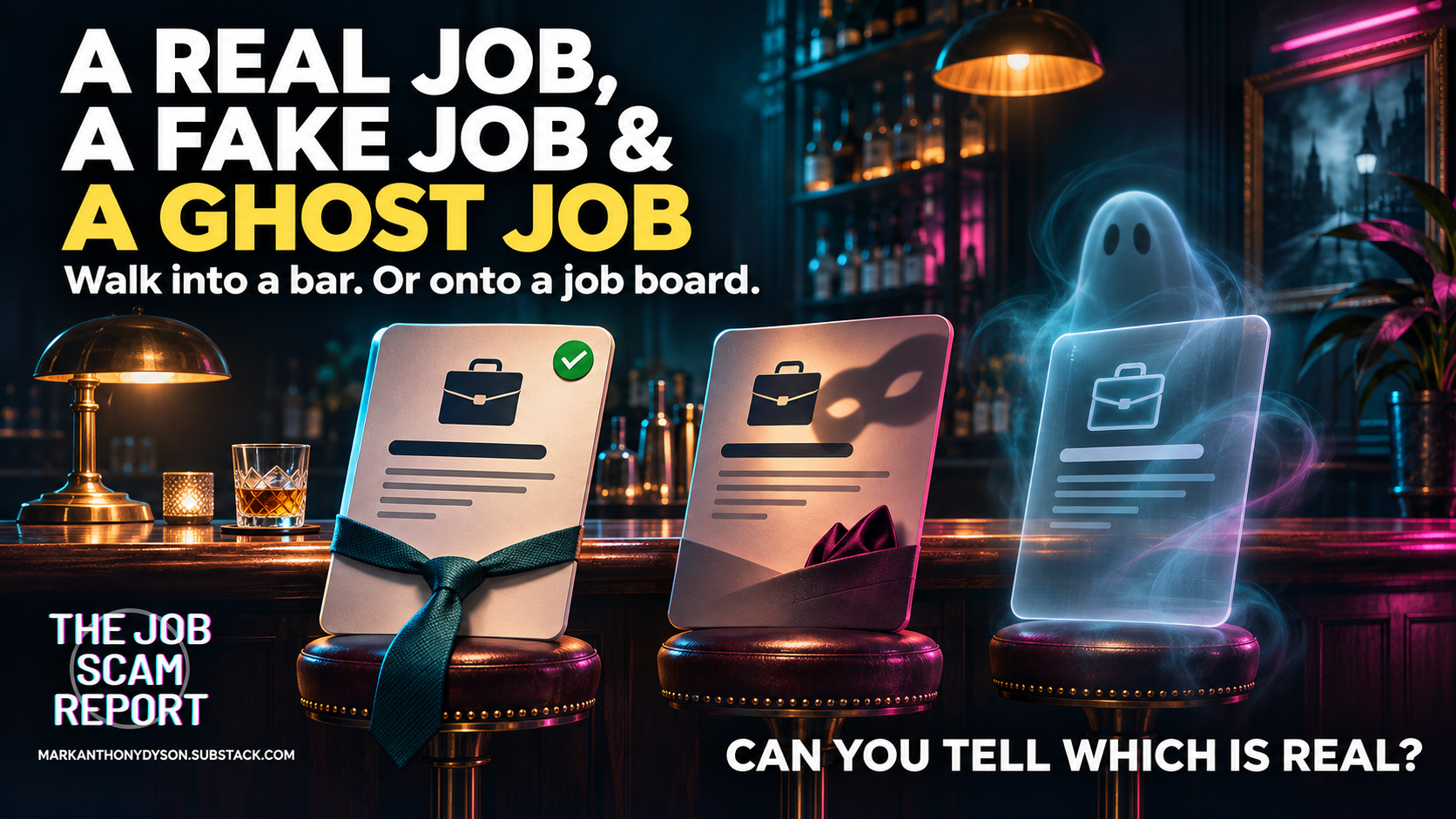
A real job, a fake job, and a ghost job walk into a bar (or onto a job board). All three look attractive. At first glance, you can’t tell which one is real. The real one will likely call you back. Which one do you think?
Recruiters get frustrated because they feel misunderstood. Some try to educate job seekers, but the question that often stays on the table is, “Why don’t you tell the applicant?”
How would you define a “ghost job,” and how common are they in today’s hiring market?
A ghost job is a posting with no intention of hiring. Ghost jobs usually come from real employers. Fake jobs come from fake companies. Job seekers often lump them together as scams.
Ghost jobs also get confused with evergreen requisitions. Recruiters use those to manage the process, and they aren’t always ghost jobs. Heck, I even confuse them. Allow me to pontificate.
How common are they? Greenhouse reported 18-22% of the jobs posted on its platform in any given quarter were classified as ghost jobs. Independent research using Glassdoor data found rates as high as 21%. Greenhouse’s data also showed that almost 70% of its client companies posted at least one ghost job in Q2 2024.
To avoid ghost jobs, especially if you don’t want them to have your data, find the job on the company’s site and apply there. I don’t like how ghost jobs just collect data without giving the applicant an option to be used for the job posting they applied for. Not ALL COMPANIES, BUT some do. But that’s another article.
What are the most common reasons employers or recruiters keep job ads live when they aren’t actively hiring? What is the purpose of ghost jobs?
Employers use ghost jobs to build future talent pipelines, collect applicant data (like mailing lists), or make it look like they’re growing. In one Resume Builder survey, 59% of hiring managers admitted to hoarding resumes for later. It’s not universal, but it does occur.
One way employers use ghost jobs is to build pipelines, mailing lists, or create an illusion of company growth (you know, to compete with other companies in their industry).
Kristen Fife is a recruiter who recently explained in a LinkedIn post I shared, “We use the evergreen to manage the process. One role to apply to (vs. people applying 3+ times to the same basic job), one requisition to schedule interviews from, and the option to level up or down for a candidate without going through the entire approval process again. Once the approved roles are filled, I will close the evergreen.”
Scams are a different problem. Fake companies sometimes use real recruiters’ identities to lure job seekers into applying for fake jobs. A real, fake, and ghost job walk into a bar, and you spend more time than you should figuring out which is real. Because that’s the one you want to date, right?
Recent Greenhouse data shows the suspicion is real. Three in five candidates say they’ve suspected a ghost job, and the platform data backs them up. It isn’t just in their heads.
My guest at one time, Craig Fisher, offers this explanation from an employer’s point of view:
What are the clearest warning signs that a job seeker may be looking at a ghost job listing?
Look at the dates first. They walked into the bar together, and you can’t tell which one is well past its expiration date or which one is going to give you a fake number, but the real one has similar attributes to the other two. All three get equal amounts of attention.
Hundreds of applicants alone don’t make a job a ghost, but combined with these signs, it should make you cautious.
What impact can ghost jobs have on candidates?
If you’ve applied to multiple ghost jobs, you can end up with what people call “unemployment fatigue” or “layoff PTSD.” Neither is an official diagnosis, but the feeling is real. Uncertainty leads to doubt. Doubt can lead to discouragement, or worse, depression.
The latest Greenhouse study found that 79% of workers report heightened anxiety in this job market. That tells me the toll is real.
How can job seekers verify whether a job listing is real before investing significant time in the application?
Copy parts of the job description into a search to see whether it’s copied or outdated. Use LinkedIn to see whether the company is actively hiring (some will, some won’t). Connect with former and current employees. They may help you confirm whether the opening is active.
Watch out for fake recruiters, employees, and companies. Verify through channels they didn’t give you, because the ones they supply can lead to fake verification. And if they do walk into a bar (or job board) together, understand it’s a lot of work to figure out the real one. But it doesn’t have to be.









About Mark Anthony Dyson
I am the "The Voice of Job Seekers!" I offer compassionate career and job search advice as I hack and re-imagine the job search process. You need to be "the prescription to an employer's job description." You must be solution-oriented and work in positions in companies where you are the remedy. Your job search must be a lifestyle, and your career must be in front of you constantly. You can no longer shed your aspirations at the change seasons. There are strengths you have that need constant use and development. Be sure you sign up to download my E-Book, "421 Modern Job Search Tips 2021!" You can find my career advice and work in media outlets such as Forbes, Inc., Fast Company, Harvard Business Review, Glassdoor, and many other outlets.